

Corporate event entertainment has one job: give people a reason to step out of their usual work rhythm and into the room. That does not mean every guest needs to be on a dance floor, in a competition or under a spotlight. It means the experience should make it easier to start a conversation, share a laugh, celebrate a win or carry a useful memory away from the night.
The strongest corporate event entertainment ideas begin with the moment you are planning. A client appreciation dinner has a different rhythm from a conference social. A holiday party can invite more energy than an awards program. A product launch may need guests to create content, while a company anniversary may be more about making colleagues feel recognized. Choose the outcome first, then choose the entertainment.
Start With the Kind of Participation You Want
There is a big difference between entertainment guests watch and an experience they can enter at their own pace. Both have a place. A musician can set the tone during arrivals. A host can direct attention during an awards presentation. But the most useful moments for conversation and connection often give guests something small to do together.
Before you book anything, write down one desired outcome. Do you want colleagues from different teams to mingle? Do you want visitors to stop at a trade-show booth? Do you need a visible brand moment? Do you want guests to leave with a polished keepsake? The answer makes the decision clearer than a long list of trendy ideas.
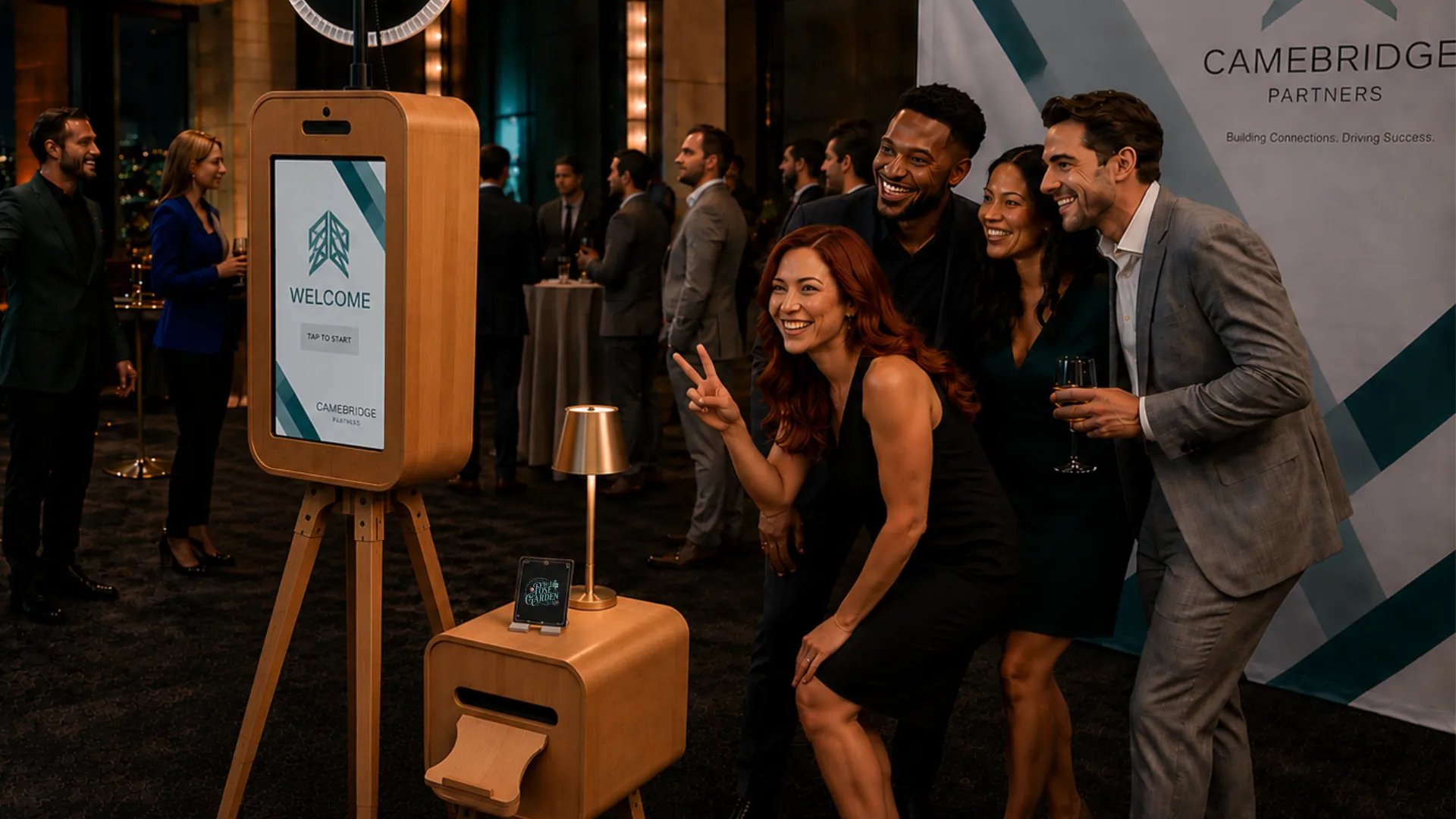
1. A Polished Photo Booth
A Photo Booth gives guests an immediate reason to gather, without asking them to perform for the whole room. It works for holiday parties, galas, client events, awards dinners and conferences because people can participate with a colleague, a client or a new connection. The best setups use flattering light, a backdrop that suits the event and a clear place to stand.
For a more formal room, keep the styling edited and let the portraits do the work. For a relaxed celebration, add a few props or a themed backdrop. The key is making the experience visible enough that the first groups know exactly where to go, while leaving enough space for people to join and exit comfortably.
2. Branded Photo Moments
When visibility matters, turn the photo into a useful part of the brand experience. A custom layout, backdrop, print, booth wrap or digital delivery moment can connect the event to the image guests receive. That works particularly well for product launches, conferences, trade shows, employee milestones and client-facing celebrations.
The detail should feel like part of the occasion, not a logo pasted over someone's face. Use the event name, campaign look or a simple visual treatment that matches the room. The result is more likely to be saved, shared and remembered because it still feels like a good photo of the person in it.

3. Interactive AI Photo Experiences
Interactive AI photo experiences can give a familiar Photo Booth moment a fresh twist. Guests begin with a real photograph, then receive an imaginative version tied to the event concept, such as an editorial portrait, themed trading card or custom visual treatment. It creates a natural point of curiosity because people want to see what their own result will look like.
This is a strong choice when the event needs an experience people can talk about after it ends. It also gives planners a way to carry a campaign idea through the guest journey without turning the room into a hard sell. Keep the concept clear, the instructions short and the visual direction connected to the event rather than whatever happens to be popular that month.

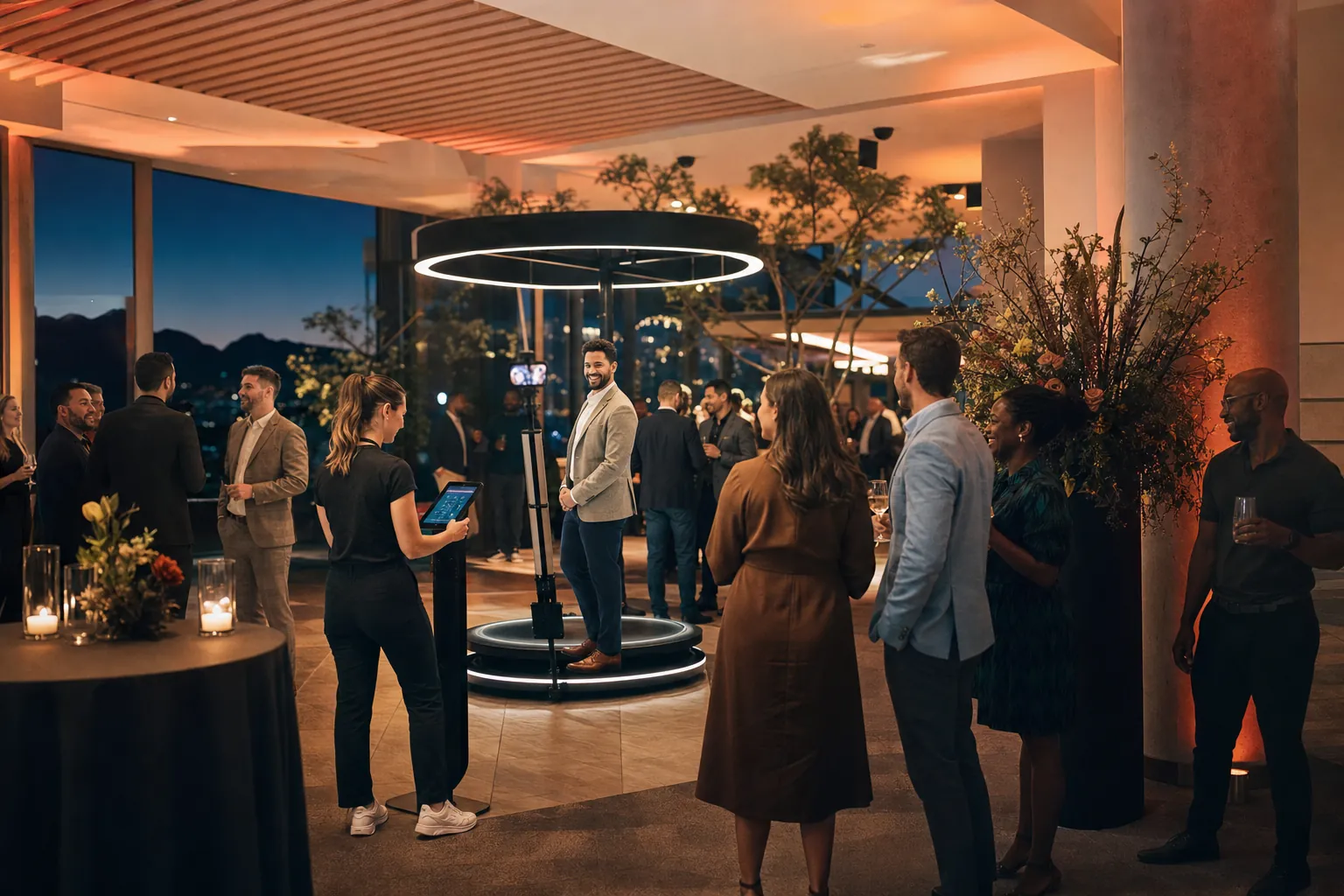
4. 360 Video Booths
A 360 Video Booth gives groups a more energetic way to make content together. It is especially useful for celebrations with a party-forward mood, a strong visual theme or an audience that will enjoy sharing short video moments. Because groups can step on together, it creates a little audience around the experience before and after each turn.
Plan the placement carefully. A 360 setup needs a clear perimeter, good sightlines and room for guests to wait without blocking food, registration or the bar. It is most successful when it feels like a destination within the event, not an activity squeezed into the remaining corner.
5. A Live Host or Game Moment
A hosted game, short trivia round or thoughtful emcee moment works best when it has a clear beginning and end. It can wake a room after dinner, give teams an easy shared laugh or help an awards program move between formal segments. Keep the format simple enough to understand in seconds and avoid making reluctant guests feel singled out.
The best question is not “What game will be funniest?” It is “What will make this particular group comfortable joining in?” A smaller company may enjoy a friendly team challenge. A client event may be better served by a host who keeps the room warm without asking everyone to compete.
6. Keepsake Stations and Hands-On Details
Guests tend to remember an experience when they leave with something connected to a moment they actually took part in. A photo keychain, print, trading card or small personalized keepsake can turn a quick interaction into a useful favor. These experiences work well at open-house events, brand activations, employee celebrations and any event where guests arrive and leave at different times.
Think about the line before you commit. The takeaway should be meaningful, but it should not take so long to create that guests abandon the experience. A clear start point, an attendant and a well-placed display help keep the energy moving.
7. Entertainment That Supports Conversation
Not every gathering needs a headline performance. For cocktail receptions, networking events and client dinners, the best entertainment may simply give people an easy opener. A portrait moment, a roaming photographer, a tabletop activity or a small creative station can help guests approach each other without interrupting the conversation the event was built for.
This is where a lot of corporate events go sideways. A loud act can be impressive, but it can also make the room harder to use. Match the volume and pace to the schedule. During arrival and conversation, choose an experience people can step into. Save the room-wide energy for the point in the event when you actually want everyone's attention.
Make the First Five Minutes Easy
Even an excellent idea can miss if guests do not understand it when they walk in. Put the experience where it is easy to spot, give it a visual cue that fits the room and make the first step obvious. A welcome sign, a well-lit backdrop, a host who greets the first group or a simple sample of the finished keepsake can do more than a long explanation ever will.
This matters most when the guest list mixes people who know each other with people who do not. A useful activity lets a new employee join a senior leader, a sales team member join a client, or a conference attendee join a stranger without the awkwardness of inventing a reason to talk. The entertainment becomes a bridge rather than a performance people watch from the edge.
Give guests permission to participate on their own terms. Some will be ready to step in immediately. Others will wait until they see a colleague enjoying it. That is normal. Design for both. Keep the setup welcoming from a distance, avoid putting the first person under pressure and let the social proof build naturally as the room fills.
Match the Energy to the Schedule
Timing can make a modest experience feel special, while poor timing can make a great one feel forgotten. During arrivals, choose something people can enjoy in short bursts while they find colleagues and settle in. During dinner, keep the atmosphere supportive rather than disruptive. After an awards moment or presentation, a higher-energy interaction can bring the room back to life.
For a multi-hour event, it is often smarter to build a rhythm than to put every idea on at once. Start with a welcoming photo or conversation moment. Add a short shared activity when the schedule calls for attention. End with an experience guests can take away, share or talk about on the way home. That sequence gives the evening movement without making the event feel over-programmed.
Ask the venue where guests will naturally pass between registration, food, seating and the bar. Those pathways are often more valuable than the largest empty corner. An experience in the right place will draw a steady flow of participants. The same setup hidden behind a column or far from the main room may look beautiful and still be missed.
How to Choose the Right Idea for Your Event
Use a short filter. First, who is in the room: employees, clients, prospects, partners, or a mix? Next, what should they feel: celebrated, welcomed, energized, connected or curious? Finally, what should they do after the experience: share a photo, start a conversation, visit a stand, remember the brand or simply enjoy the evening?
Then check the real logistics. Confirm the guest count, room layout, power, load-in path, service window, brand assets and any venue rules. A thoughtful experience loses value if it creates a queue in the wrong place or arrives without enough time to look finished. Good event entertainment feels effortless because the planning underneath it was not.
Budget is part of that decision, but it should not be the only one. A lower-cost experience that fits the audience and runs smoothly can outperform a larger booking that leaves no space for guests to talk, eat or participate. Decide what the experience needs to accomplish, then put the budget behind the version that can deliver that outcome well.
It also helps to name the person responsible for the final details. They should know the venue contact, arrival time, placement plan and the one thing that cannot be missed, whether that is a sponsor treatment, a branded photo, an employee recognition moment or an easy guest flow. Clear ownership is what turns a good idea into a finished experience.
Build a Corporate Experience Guests Want to Join
The Pose Garden creates Photo Booths, branded experiences, AI photo moments, 360 videos and keepsakes for corporate events across Phoenix and Arizona. We help you choose the details that fit the room, the audience and the outcome you want from the event.
Explore corporate event experiences or tell us what you are planning.
Questions, answered
Frequently asked questions
What entertainment works best for a corporate event?
The best choice depends on the job the event needs to do. A networking reception benefits from an easy conversation starter, while a gala can support a more polished photo moment or performance. Start with the guest outcome, then choose an experience that fits the room, schedule and audience.
How do you make a corporate event more engaging?
Make participation easy and optional. Give guests a clear invitation, a visible setup, enough room to join without feeling watched, and an experience that works for more than one type of personality. A simple, well-supported interaction usually beats a complicated activity that needs a long explanation.
How early should corporate entertainment be planned?
Decide on the experience once the venue, guest count and event schedule are taking shape. Those details determine the space, power, staffing, branding and service window an activity needs. Starting early also leaves time to make the details feel intentional rather than added at the last minute.
More from The Pose Garden
Related posts

Corporate Photo Booth Rental Phoenix: Women to KNOW Gala
A polished DSLR booth, flattering glam portraits and thoughtful event branding gave gala guests a photo experience that matched the occasion.
Read the story →